
C.R.I.S.E.S. Act
When someone is in crisis, the right help can be a trained community responder. The C.R.I.S.E.S. Act funds crisis workers from trusted local organizations to respond to calls that can be safely routed to crisis responders.

The Basics
To understand why California needed the C.R.I.S.E.S. Act, it helps to know how the state came to send armed police to respond to so many kinds of crises in the first place.
In 1967, California passed the Lanterman-Petris-Short Act, ending indefinite involuntary institutionalization and began closing its state mental hospitals. For these closures to transition effectively into community care, counties would build community mental-health infrastructure to take the place of the hospitals. Unfortunately, the money never followed. Provisions that would have required counties to plan and pay for community care were stripped out before passage, and years later, as president, Ronald Reagan signed a budget that gutted federal mental-health funding again.
With mental health care decimated, many of the gaps were filled by law enforcement. With no real community system to call, mental-health crises became matters for police, jails, and emergency rooms by default — and the same pattern took hold across other crises the state never built a real system to answer: substance use, homelessness, intimate partner violence, and community violence. Over the following decades, this became the norm across California: whether someone is having a psychiatric episode, struggling with addiction, sleeping on the street, or caught in a violent situation at home, the responder the system sends is an armed police officer. The harm of this evolution has fallen hardest on Black Californians and on people living with untreated mental illness, and it is why families across the state have spent years demanding something different.
The C.R.I.S.E.S. Act is one of California's first statewide attempts to fund something different – trained, unarmed crisis workers based in community organizations who can respond across the full range of emergencies that don't require police, a fire crew, or an ambulance.
By The Numbers
•
By The Numbers •
Community-based crisis response has gone from a handful of experiments to a national movement. Since 2020, the number of community responder programs in the United States has grown more than tenfold, and they now operate in at least 31 states.
Communities are building these alternatives because the current default is deadly, and the harm falls unevenly. A person living with untreated serious mental illness is about 16 times more likely to be killed in a police encounter than other civilians. The danger also breaks down along racial lines: Black Americans are killed by police at more than twice the rate of white Americans, about 6.1 deaths per million people each year versus 2.4, even though Black people are only about 14 percent of the population.
AB 1932 would send grants directly to community-based organizations, at a minimum of $250,000 per grantee each year, and run the new pilot through 2032. The first round routed money through city, county, and tribal departments instead.
The first C.R.I.S.E.S. pilot awarded $9.5 million to four communities and their local community-based partners. One of those partners, Family Bridges, is based in Oakland and is a shining example of how hyperlocal community building can improve public safety outcomes.
Why the Crises Act?
There is no single blueprint for crisis response that can be dropped into every neighborhood. What a community in East Oakland needs is not necessarily what the boardwalk in Santa Cruz needs or even what the Tenderloin in San Francisco needs. The people best positioned to grow and develop these blueprints are the organizations already rooted in those communities and who have experience responding to crises.
That is what makes the C.R.I.S.E.S. Act special. Rather than build a single program from the top down, it funds community-based organizations directly so they can grow crisis response that fits the needs of the people they serve with the support of stakeholders and resources from the state. And, in turn, these community based crisis response programs can be used to improve our understanding of best practices across the field of crisis response.
People & Families that Motivated the CRISES Act
Miles Hall, 23, killed by Walnut Creek police during the mental-health crisis just two blocks from his home after his family called for help.

Photo courtesy of the Miles Hall Foundation
Miles Hall was raised in Walnut Creek. He was a self-taught musician who played guitar and piano and made beats for his friends. He was often seen riding around Walnut Creek on his beach cruiser and loved being outdoors. Miles lived with schizophrenia, and his family had informed the police about his condition long before the day they needed help.
On June 2, 2019, Miles’ family called for help during a crisis. Walnut Creek Police Officers responded, and within moments of arriving they shot and killed him.
His parents Scott and Taun Hall, founded The Miles Hall Foundation, and fight for a world where Black families are able to get the care and compassion they need for their loved ones when in crisis.
Steven Taylor, 33, a father killed within about 40 seconds at a San Leandro Walmart while in crisis. seconds at a San Leandro Walmart while in crisis.
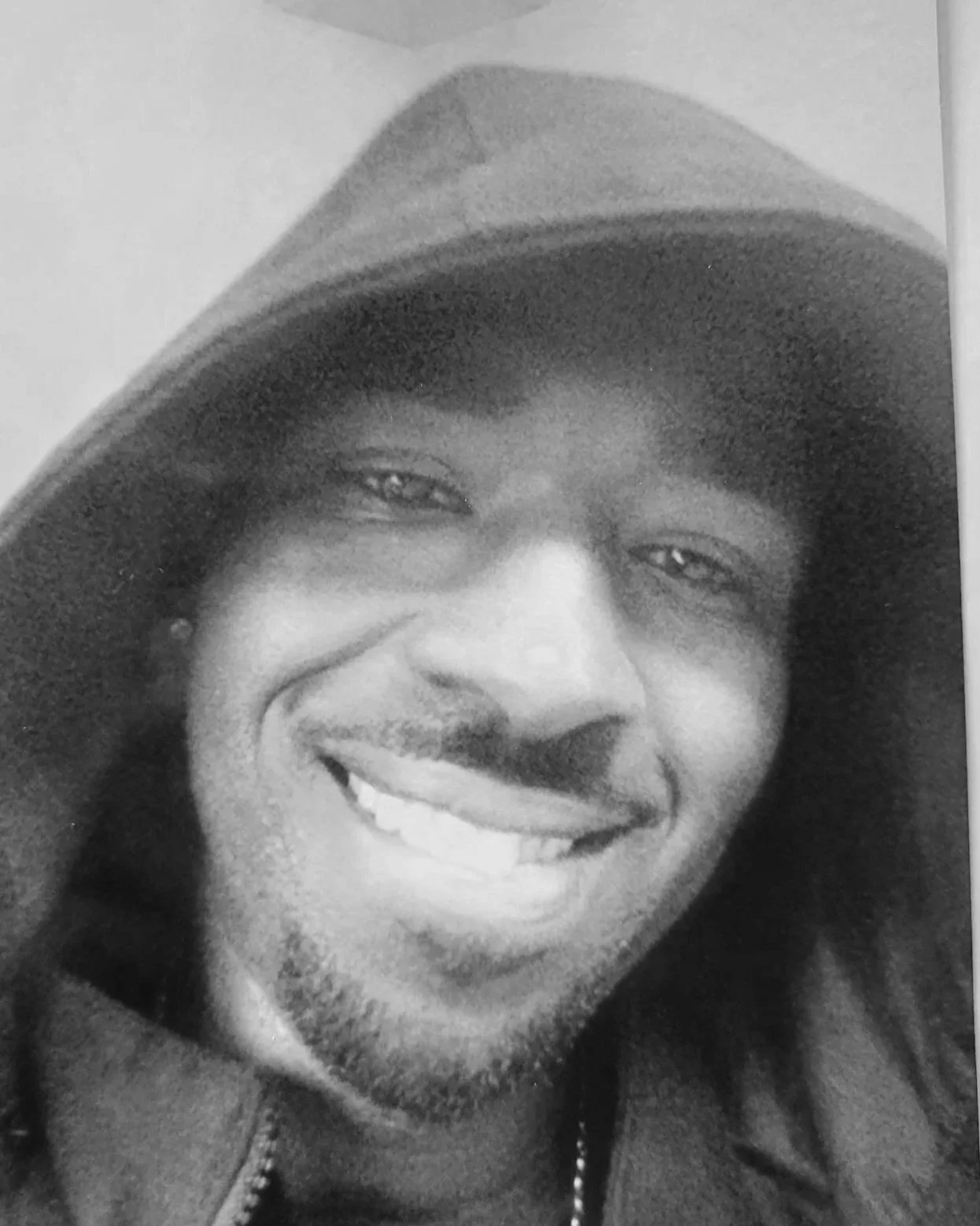
Photo courtesy of Justice 4 Steven Taylor
Steven Taylor was a father and a gifted rapper with many musical talents—a beloved grandson, son, and brother who was raised by his grandmother, Addie Kitchen, alongside his two brothers in San Leandro.
On April 18, 2020, he was in a mental-health crisis inside a San Leandro Walmart, holding a baseball bat, when Officer Jason Fletcher tased him and then shot him, all within about 40 seconds. Steven's grandmother, Addie Kitchen, has led the family's fight for justice, for accountability, and for civilian-led crisis response for people in mental health crises.
The city of San Leandro has declared that April 18 each year will honor Steven Taylor and "the Sanctity of Every Human Life."